

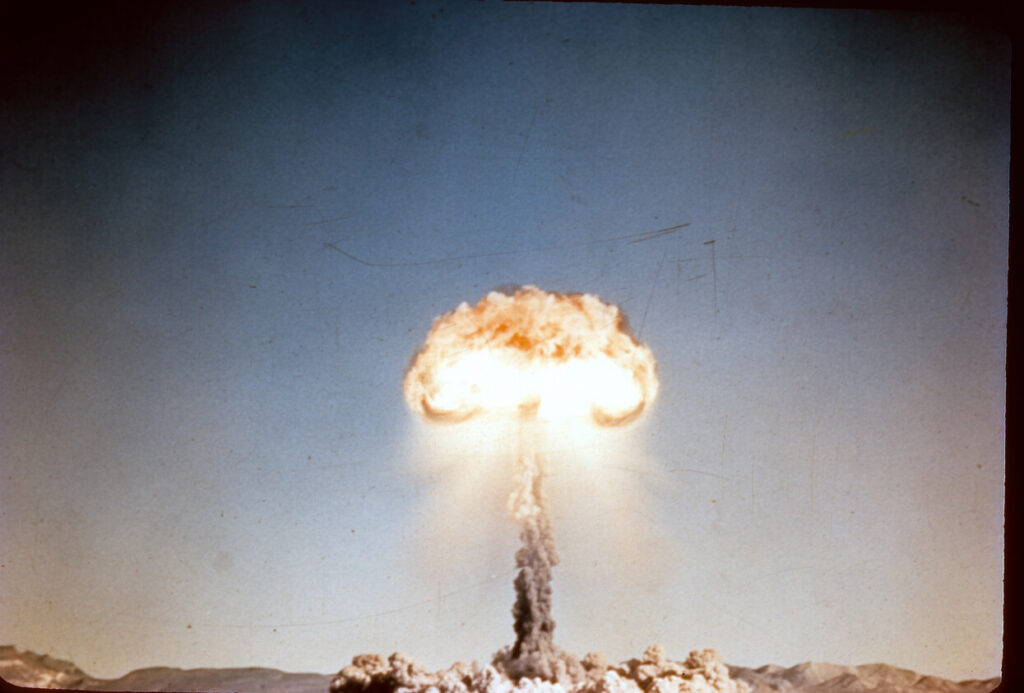
In short, atmospheric nuclear tests conducted during the Cold War exposed millions of Americans to radioactive fallout, increasing cancer risks for those living downwind of test sites.
- Radiation exposure risks – Fallout from atmospheric nuclear tests released carcinogens that traveled thousands of miles.
- Cancer types affected – Thyroid cancer, leukemia, and other malignancies have been linked to radiation exposure.
- Compensation available – Eligible individuals may qualify for federal benefits through the Radiation Exposure Compensation Act.
This article examines the scientific evidence linking atmospheric nuclear tests to cancer, explains which populations face the highest risk, and provides guidance for those seeking compensation for radiation-related illnesses.
How Atmospheric Nuclear Tests Released Dangerous Radiation
Atmospheric nuclear tests conducted between 1945 and 1962 released massive amounts of radioactive particles into the environment, affecting communities across the United States. During this period, the government detonated more than 200 nuclear weapons above ground at sites in Nevada and the Pacific. The resulting fallout spread across the country, exposing millions of people to harmful radiation without their knowledge or consent.
Each detonation released radioactive isotopes into the atmosphere, including iodine-131, cesium-137, and strontium-90. These particles traveled on wind currents and eventually settled on communities, farmland, and water sources hundreds or even thousands of miles away.
When radioactive fallout contaminated soil and water, it entered the food chain. Livestock consumed contaminated grass and water, concentrating radioactive iodine in their milk. People who drank this milk or ate contaminated produce absorbed radioactive particles into their bodies, where the isotopes damaged cellular DNA and increased cancer risk.
The intensity of exposure varied by location and weather patterns. Communities in Nevada, Utah, and Arizona received the heaviest fallout, earning the designation “Downwinders.”
Cancer Types Linked to Radiation From Nuclear Tests
Radiation exposure from atmospheric nuclear tests has been associated with multiple cancer types. The strength of these associations varies based on the type of radiation, level of exposure, and individual susceptibility factors.
Thyroid Cancer
Thyroid cancer represents one of the most well-documented consequences of atmospheric nuclear testing. Radioactive iodine-131 concentrates in the thyroid gland, where it damages cells and increases cancer risk.
The thyroid gland absorbs iodine from food and water to produce hormones. When radioactive iodine-131 enters the body, the thyroid cannot distinguish it from stable iodine and absorbs it readily. This creates prolonged radiation exposure within the gland itself.
Leukemia
Leukemia, particularly acute and chronic forms, has been linked to radiation exposure from atmospheric nuclear tests. Bone marrow, which produces blood cells, is highly sensitive to radiation damage.
The latency period for radiation-induced leukemia is typically shorter than for solid tumors, with cases often appearing within 5 to 10 years after exposure.
Other Solid Tumors
Beyond thyroid cancer and leukemia, atmospheric nuclear tests have been associated with increased rates of lung cancer, breast cancer, colon cancer, and stomach cancer.
Lung cancer risk increased partly because radioactive particles inhaled during fallout events damaged lung tissue directly. Breast cancer risk rose among women exposed during childhood and adolescence, when breast tissue undergoes rapid development and is most vulnerable to radiation damage.
Who Faces the Highest Cancer Risk From Atmospheric Nuclear Tests
Not everyone exposed to fallout from atmospheric nuclear tests faces the same level of cancer risk. Several factors influence individual susceptibility.
Geographic Location
People living in Nevada, Utah, Arizona, and parts of Idaho, Montana, Colorado, and New Mexico received the highest radiation doses. The prevailing wind patterns during test periods carried fallout eastward across these states. Communities located directly downwind of the Nevada Test Site experienced the most intense exposure.
However, fallout reached every state in the continental United States. Even areas far from test sites received measurable contamination, though at lower levels.
Age at Exposure
Children and adolescents faced higher cancer risks than adults exposed to the same radiation doses. Growing tissues are more vulnerable to radiation damage because cells divide more rapidly during development. The thyroid glands of children absorb iodine more efficiently than adult glands, increasing their radioactive iodine uptake.
Research consistently shows that younger age at exposure correlates with higher cancer rates, particularly for thyroid cancer and leukemia.
Duration and Intensity of Exposure
Cumulative radiation dose matters significantly. People who lived in high-fallout areas throughout the entire testing period accumulated larger doses than those who moved away or lived in lower-exposure zones. Similarly, individuals who consumed large quantities of contaminated milk and produce faced greater risks than those with limited dietary exposure.
Occupation also played a role. Farmers, ranchers, and outdoor workers spent more time exposed to contaminated soil and dust, potentially increasing their radiation intake.
Federal Compensation for Radiation-Related Cancer
The Radiation Exposure Compensation Act (RECA), enacted in 1990, provides financial compensation to individuals who developed certain cancers after exposure to radiation from atmospheric nuclear tests or uranium mining. The program acknowledges the government’s responsibility for harm caused by nuclear weapons development.
Eligible Cancers and Populations
RECA covers downwinders who lived in designated counties in all of Utah, New Mexico, and Idaho, plus areas in Nevada, Arizona, and Colorado, and subsequently developed one of the covered cancers. Eligible cancers include leukemia (excluding chronic lymphocytic leukemia), multiple myeloma, lymphomas, and primary cancers of the thyroid, breast, esophagus, stomach, pharynx, small intestine, pancreas, bile ducts, gall bladder, salivary gland, urinary bladder, brain, colon, ovary, liver, and lung.
The program also covers onsite participants who worked at nuclear test sites and uranium workers who developed lung cancer or certain other respiratory diseases.
Compensation Amounts
Eligible Downwinders receive $100,000 in compensation. On-site participants can receive $75,000, while uranium workers may receive $100,000, depending on their work history and illness.
Application Process
Applying for RECA benefits requires documentation of residence in a covered area during the relevant time period, medical records confirming a covered cancer diagnosis, and proof of the required duration of residence. The application process can be complex, and many applicants benefit from professional assistance.
The National Cancer Benefits Center specializes in helping Downwinders and Department of Energy workers navigate the RECA application process.
Protecting Your Health After Radiation Exposure
If you lived in an area affected by fallout from atmospheric nuclear tests, several steps can help protect your health and detect cancer early.
Regular Cancer Screenings
Talk with your healthcare provider about appropriate cancer screening based on your exposure history. Thyroid examinations, including ultrasound imaging, can detect thyroid nodules and cancers at early, treatable stages. Blood tests can screen for certain types of leukemia and other blood disorders.
Women with radiation exposure should discuss breast cancer screening recommendations with their doctors, as earlier or more frequent mammography may be appropriate depending on exposure history and other risk factors.
Maintain Detailed Medical Records
Keep thorough records of your medical history, including any cancer diagnoses, treatments, and ongoing care. Document your residential history, especially if you lived in high-fallout areas during the atmospheric testing period. This information will be valuable if you decide to apply for RECA compensation.
Know Your Family History
Radiation exposure can damage DNA in ways that may affect multiple generations. Inform your children and grandchildren about your exposure history, so they can discuss it with their healthcare providers.
Get Help for Radiation Exposure From Nuclear Testing
If atmospheric nuclear tests exposed you to radiation and you have since developed a covered cancer, you may be eligible for federal compensation through RECA.
The National Cancer Benefits Center assists Downwinders and Department of Energy workers in obtaining the compensation they deserve. The team understands the medical and legal complexities of radiation exposure claims and can guide you through each step of the application process.
Contact the National Cancer Benefits Center at (800) 414-4328 or use our online information request form to learn whether you qualify for benefits and how to begin your claim.
